
Military Transition and Identity: Who Am I After Leaving the Military?

Lost in Translation.
By ACSIS Coach Simon Kelly.

The Rig I Didn’t Return to Stores: A Leadership Transition I Didn’t Expect
The last piece of kit I carried home wasn’t in my grip.
Nobody tells you this when you’re leaving.
You complete a final medical, return your rig to stores, sign the paperwork, have the corner clipped off your ID and walk out of the dockyard for the final time.
I thought I’d handed everything back.
Turns out I’d carried one piece of rig home with me.
Not the uniform. Not the rank. Something far less visible: the quiet expectation that, when I spoke, my view carried extra weight.
The realisation didn’t come in a meeting, or a final debrief. It came at home.
My wife and I were mid-conversation. Nothing dramatic. But I caught myself waiting for my opinion to settle it. Not because I thought she was wrong, but because after years of leadership I’d become used to having the final word.
That stopped me.
Not with guilt, but with curiosity.
Had authority become a filter?
The Hidden Impact of Military Transition
It’s easy to blame rank, but it’s broader than that.
Sometimes it’s the rank on your shoulder. Sometimes it’s your role. Commanding Officer. Team Leader. The accountable voice in the room.
The habit is not necessarily ego. Sometimes it’s an expectation the team places on you.
Over time, that can shape you.
And it doesn’t necessarily stop when you leave.
Some of the consultancy work I’ve done since leaving has reinforced it. You’re brought into the room precisely because people want your experience and your opinion. You’re asked for recommendations. People listen.
That’s entirely appropriate.
But it can also reinforce the habit.
When Leadership Habits Follow You Home
Leadership needs judgement.
Sometimes you have to decide. Sometimes people need you to provide the answer.
But not every conversation needs my answer.
And sometimes the people around us, particularly those closest to us, deserve something quieter.
They deserve the space to think out loud, to have their perspective properly heard, without my experience or former authority quietly, subconsciously nudging theirs aside.
“Not every conversation needs my answer.”
That has been one of the most important lessons of my own transition.
Learning to Lead Differently After Senior Leadership
That’s particularly important for me as I make the transition from senior leadership into professional coaching.
Coaching asks for a different kind of discipline: resisting the urge to demonstrate expertise, holding back a fraction longer, asking one more question and trusting the other person’s perspective.
It’s about creating the conditions for better thinking rather than automatically providing the answer.
I’m discovering that can be harder than having the answer.
I don’t want to lose what my career taught me.
Experience matters. Judgement matters. Leadership matters.
But I am learning that those things can be used differently.
The value is not always in providing the solution.
Sometimes it is in helping someone find their own.
Who Am I After Leaving the Military?
For many people leaving a long career, the practical questions come first.
What happens next? What role should I look for? How do I explain years of experience to someone who has never served?
Those questions matter.
But underneath them is often a deeper question.
Who am I when the role ends?
A career can become part of your identity. Your rank, responsibilities and position influence how you see yourself and how others see you.
But the role was never the whole story.
The judgement, experience, curiosity and values that made you successful did not disappear when the uniform came off.
They were always yours.
The challenge is learning what belonged to the role and what belonged to you.
What would people say about me if the rank were removed from the conversation?
What do I do that has nothing to do with the job description?
What lights me up regardless of whether it appears on a performance report?
Those answers matter.
The Difference Between Authority and Influence
I don’t want to lose what my career taught me.
Experience matters. Judgement matters. Leadership matters.
But perhaps the rig I never returned to stores wasn’t authority itself.
It was the assumption that authority should follow me into every conversation.
I’m still learning to take that off.
Perhaps that’s what this next chapter, this leadership transition, is really about.
Not leading less, but leading differently.
With more curiosity. Less certainty.
And with a growing belief that the most valuable thing I bring into a room isn’t necessarily my opinion.
It’s the quality of my listening.
Clarity, Courage, Connection
Clarity. Understand what parts of your identity came from the role and what parts were always yours. A title or position may shape your environment, but it does not create your character.
Courage. Transition requires honesty. It takes courage to question habits that made you successful and consider what needs to change for the next chapter.
Connection. The strongest relationships are often the ones that remain when the role disappears. The people who know you beyond the title help you understand who you are beneath it.
If you are navigating military transition and identity, and trying to understand what comes next, the ACSIS Free Clarity Call creates space to think, reflect and explore your next chapter.
Looking for More Clarity, Courage and Connection?
If you are ready to find your heading, ask better questions and build a future that feels like yours, the Free Clarity Call is where we start.
It is one conversation. No pressure. Just space to think clearly about what comes next.
Sam, Lloyd and Simon work with people who are carrying stress, pressure or emotional weight and want practical support to move forward with greater clarity, confidence and connection. Sometimes the shift starts with something big. Sometimes it starts with something smaller, a pause, a breath, a different perspective, a little more lightness.
👉 Book a FREE Clarity Session with ACSIS Life Coaching
👉 Visit acsis.co.uk or email contact@acsis.co.uk
About Simon Kelly
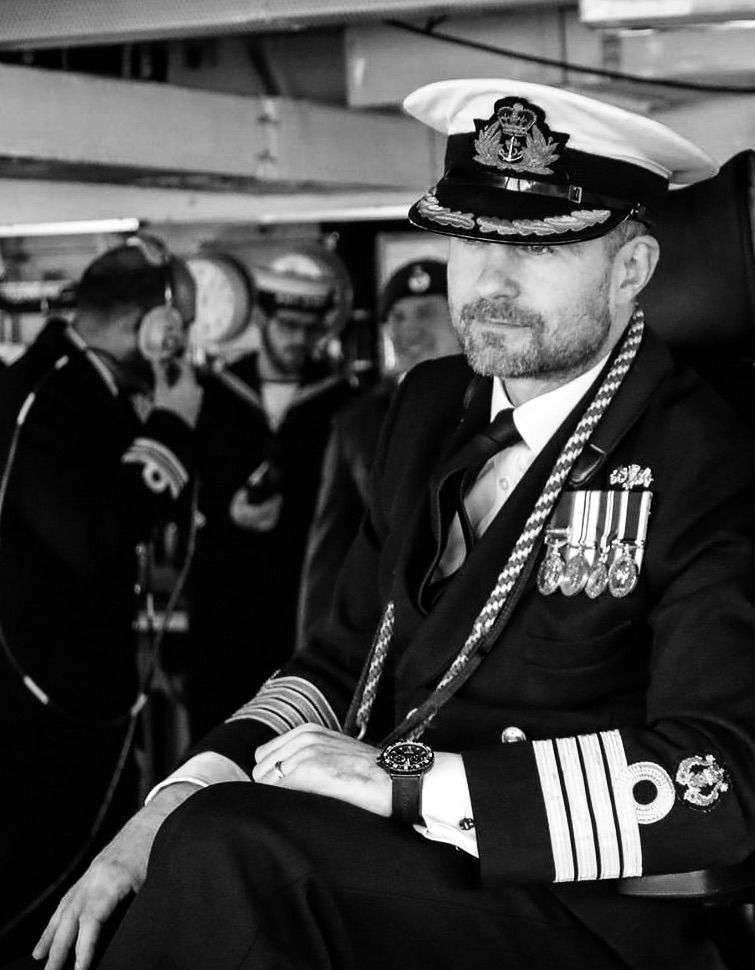
Simon Kelly is a former Royal Navy Commodore, leadership coach and facilitator. Drawing on three decades of operational command, strategic leadership and experience leading through complexity and change, he now works with senior leaders navigating transition and demanding professional environments.
His coaching creates the conditions for better thinking, combining curiosity, listening and challenge to help leaders find their own answers, lead authentically and build greater confidence and resilience.
Military Transition and Identity FAQs
Why does leaving the military affect your identity?
Leaving the military affects identity because service provides more than employment. It provides structure, responsibility, purpose, relationships and a clear role within a wider organisation.
Who am I after leaving the military?
Many people ask this question during transition. The answer is that you are still the person you have always been. Your rank and role shaped your experience, but they did not create your values, strengths or character.
How do senior leaders adjust after leaving a leadership role?
Senior leaders often need to adapt from being the person who provides answers to creating the conditions where others can think, contribute and develop their own solutions.
Why is military transition more than finding a new job?
Military transition is not only about employment. It can involve rebuilding identity, finding new purpose, adjusting relationships and learning how to operate without the same structure and expectations.
Can leadership skills transfer into coaching?
Yes. Skills such as listening, judgement, communication, decision-making and understanding people can transfer strongly into coaching. The difference is learning when to provide direction and when to create space for someone else to find their own answer.


Leaving the military, identity and who you are without the uniform is something I think most people struggle with to a degree. Taking time and talking it through with a coach helps me better understand how I’m going to move forward.