
Perimenopause at Work: When Career Change and Hormones Collide

What I wish someone had told me. And what I am telling you now.
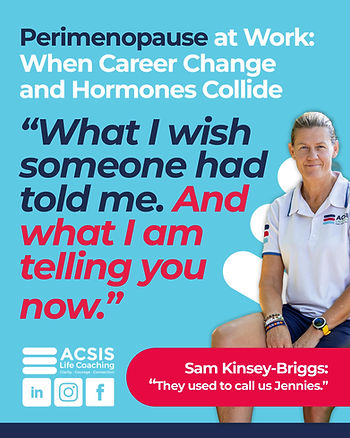
They used to call us Jennies.
Women in the Royal Navy. A word that has softened and faded as the Service has evolved, as women have taken on every role, every rank and every deployment. We are not Jennies anymore. We are officers, ratings, engineers, pilots and commanding officers.
But there are parts of this career that remain uniquely female.
And one of them arrived in my forties without an introduction, a briefing note or a chit.
What Are the Early Signs of Perimenopause?
I wish someone had told me that perimenopause can begin earlier than many people expect. Menopause most commonly happens between the ages of 45 and 55, but the transition towards it can begin before then.
Looking back now, with the clarity of hindsight and considerably more information, I can see that I was probably experiencing perimenopause symptoms in my early forties. But I did not know that then. The symptoms were there and the impact was real, but without the context or anyone connecting the dots, they were just a collection of things that felt harder than they should.
“I dealt with it. Because that is what you do in the military. You deal with it and you carry on. And I was none the wiser. The symptoms were just odd things that I never connected to each other or to what was actually happening in my body.”

Looking at that graph for the first time changed something for me. It made the invisible visible and gave context to experiences I had been navigating in the dark.
Perimenopause at Work: When Symptoms Start Affecting Your Career
It was the fatigue that finally made it undeniable.
The constant lethargy. A six-week heavy period that was simply not compatible with functioning at the level my career required. Regular brain fog. Memory problems that felt genuinely frightening in someone who had always been sharp, precise and detail-oriented.
Heavy or changing periods, problems with memory and concentration, sleep difficulties and fatigue can all occur during perimenopause, although symptoms vary considerably between people. Significant changes in bleeding should still be discussed with a healthcare professional rather than simply assumed to be menopause.
“I used to be able to hold a briefing, a set of figures, a complex operational picture in my head without notes. And suddenly remembering my own name and number felt like an achievement.”
I took action on two fronts at the same time. With my doctor, I became more specific. I went in with information, questions and a clear account of what I was experiencing. I advocated for myself in a way I had not needed to before.
With myself, I also became stricter about the basics that had been slipping. Drinking water before coffee, protecting my sleep, building a morning routine that did not immediately demand everything from me, and becoming more conscious about where my energy was going.
“And critically, I made a mental shift. My health became the priority. Above work. Above social commitments. Above the habit of saying yes to everything because life is for living.”
Life is still for living. But I learned that I could not continue treating my energy as though it were unlimited.
How Can Perimenopause Affect Work?
Perimenopause and menopause can have a significant effect on working life. In a UK government survey of workers in 2024–25, 82% of those who had experienced menopause or perimenopause symptoms said they had affected their ability to work. Difficulties with concentration, stress, confidence and patience were among the impacts reported.
For women in demanding careers, that can arrive alongside other significant changes. A senior role may be ending. Children may be growing up. Caring responsibilities may be increasing. Identity may already be shifting.
When career transition and perimenopause happen together, it can feel like several parts of life are moving at once.
“If an organisation values you, it will understand and support you. But you also need to communicate. Make sure the people around you know what the impact is and how they can best help. Silence helps nobody.”
That does not mean every woman will have the same experience. Some have few symptoms, while others experience symptoms that significantly affect daily life and work.
The important thing is knowing that support exists and that you do not have to minimise what is happening.
What Should You Do if Perimenopause Is Affecting You at Work?
Start by understanding what you are experiencing. Keep a record of symptoms if that helps you explain them clearly, particularly if they are affecting your sleep, concentration, periods, mood or ability to function as you normally would.
If you think you may be experiencing perimenopause or menopause symptoms, speak to your GP or another appropriate healthcare professional. The NHS specifically recommends seeking advice if symptoms are affecting you or if your bleeding pattern has changed and become heavier.
At work, think about what practical support would genuinely help. That may be flexibility, adjustments to your environment, space to attend medical appointments or simply making sure your manager understands what is happening.
You do not need to have every answer before you start the conversation.
Clarity, Courage, Connection
Clarity. Understand what is happening in your body. Knowledge gives you context and helps you ask better questions. Notice your symptoms, learn about the stage you may be in and seek proper medical advice when you need it.
Courage. Saying it out loud, to your doctor, your organisation or yourself, can still take nerve. Ask the questions. Advocate for yourself. Do not dismiss symptoms simply because you have become very good at carrying on.
Connection. Find the women who are in it or have already been through it. Shared experience can make the process feel less isolating and often brings practical insight that you will not find on a checklist.
You are still capable.
But you may need to work with your body differently than you did ten years ago.
That is not failure.
It is information.
Looking for More Clarity, Courage and Connection?
If you are ready to find your heading, ask better questions and build a future that feels like yours, the Free Clarity Call is where we start.
It is one conversation. No pressure. Just space to think clearly about what comes next.
Sam, Lloyd and Simon work with people who are carrying stress, pressure or emotional weight and want practical support to move forward with greater clarity, confidence and connection. Sometimes the shift starts with something big. Sometimes it starts with something smaller, a pause, a breath, a different perspective, a little more lightness.
👉 Book a FREE Clarity Session with ACSIS Life Coaching
👉 Visit acsis.co.uk or email contact@acsis.co.uk
Perimenopause at Work FAQs
What are the first signs of perimenopause?
Common signs can include changes to your periods, hot flushes, sleep problems, low mood, anxiety, brain fog, memory or concentration difficulties, headaches, joint pain and changes to libido. Symptoms vary considerably between people.
Can perimenopause affect your work?
Yes. Symptoms such as fatigue, sleep problems, brain fog, reduced concentration and changes in confidence can affect working life. A recent UK government survey found that 82% of workers who had experienced menopause or perimenopause symptoms reported some impact on their ability to work.
Can perimenopause start in your early forties?
Yes. Menopause usually occurs between 45 and 55, but perimenopause begins before menopause and symptoms can start earlier.
What should I do if perimenopause symptoms are affecting me?
Speak to a GP or appropriate healthcare professional, particularly if symptoms are affecting daily life or your bleeding pattern has changed significantly. It can also help to keep track of symptoms and discuss appropriate workplace support where needed.
How can employers support women going through perimenopause?
Useful support can include open conversations, appropriate flexibility, reasonable workplace adjustments and creating an environment where people can discuss symptoms without embarrassment or stigma. The exact support needed will differ from person to person.


Comments